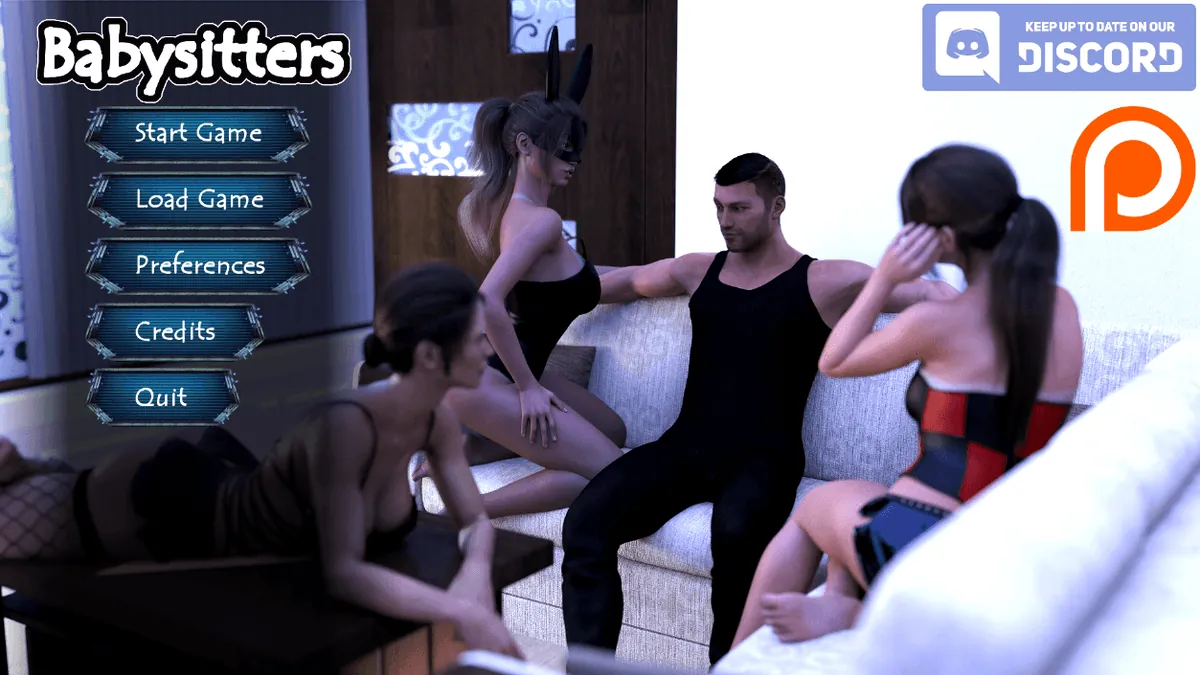
Babysitters
Play Babysitters
Babysitters Screenshots









Babysitters review
Master the narrative choices, character dynamics, and branching storylines in this interactive visual novel experience
The Babysitters adult game stands out in the interactive visual novel genre by combining immersive storytelling with meaningful player agency. This game invites you into a world where every dialogue choice, decision, and action directly shapes your experience and unlocks unique narrative paths. Whether you’re exploring the complex dynamics of household relationships or uncovering hidden secrets through careful investigation, the game rewards thoughtful engagement with its characters. Understanding the core mechanics, character relationships, and how your choices ripple through the story is essential to maximizing your playthrough and experiencing all the game has to offer.
Understanding the Core Gameplay Mechanics and Story Structure
Forget everything you think you know about visual novels. Babysitters isn’t about picking a romantic partner from a menu or clicking through static scenes. It’s about stepping into a simmering pot of suburban drama, where your primary tool isn’t a sword or a gun, but your attention and your words. The true challenge isn’t defeating a monster; it’s navigating the fragile egos, hidden desires, and explosive secrets of the adults you work for, all while ensuring the kids are safe and happy. 🎭
The magic—and the masterful tension—of the Babysitters experience lies in how it weaves together its core Babysitters game mechanics. It’s a delicate, three-part dance between dialogue choices and consequences, environmental exploration, and relentless time pressure. Mastering this interplay is the key to unlocking the game’s deepest secrets and shaping your own unique story.
How the Dialogue and Exploration System Works
At its heart, Babysitters is a game of conversation and observation. You don’t have an inventory of items; you have an inventory of information. Every interaction is built on a foundation of meaningful interactive storytelling choices.
The dialogue system presents you with options that range from sympathetic and inquisitive to skeptical and confrontational. But here’s the crucial part: these aren’t just different flavors of the same response. Choosing to ask “Are you okay?” versus “You seem distracted.” can send the conversation down radically different paths. One might open a door to a character’s vulnerability, while the other might cause them to shut down entirely. The game remembers your tone, your level of prying, and even the order in which you ask questions.
This is intrinsically linked to the visual novel exploration mechanics. While the adults are preoccupied with their dinner party drama, you are free—within limits—to investigate the house. This isn’t just aesthetic; it’s a primary gameplay pillar.
- You can examine family photos to piece together backstory.
- You might “accidentally” see a text message left on a coffee table.
- You could find a hidden letter or an unusual receipt in a study drawer.
Pro Tip: I learned the hard way that rifling through a bathroom cabinet might give you a crucial clue about a character’s stress, but if you get caught, it can destroy their trust in you permanently. Choose your investigation moments wisely! 🔍
The knowledge you gain from exploration directly feeds back into your dialogue options. Discover a secret about a character’s finances, and suddenly you’ll have new, more pointed questions you can ask them later. This creates a powerful loop of discovery → information → impactful conversation.
To see how this works in practice, let’s look at how different approaches can ripple through your story:
| Your Action (Choice) | Short-Term Impact | Potential Long-Term Narrative Consequence |
|---|---|---|
| Comforting a stressed parent with a listening ear | They open up slightly; you gain a small trust boost. | They may later confide a major secret to you, unlocking a private story branch reliant on that trust. |
| Investigating a private home office without permission | You find a suspicious document. The host is annoyed if caught. | You now possess leverage or a dark secret. This can be used to blackmail, confront, or protect someone, dramatically altering **character relationship dynamics**. |
| Choosing to give advice vs. just listening to a marital complaint | Advice may backfire immediately; listening builds rapport. | Taking a “side” in a conflict can lock you out of the other spouse’s storylines forever. The game doesn’t let you play all sides seamlessly. |
| Revealing a secret you learned to a third party | Causes immediate drama, shifting the party’s mood. | Permanently changes how both involved characters view you. Could lead to a fiery confrontation branch or get you fired on the spot. |
The Impact of Player Choices on Narrative Progression
This brings us to the engine of the experience: the branching narrative gameplay. Think of the story not as a straight line, but as a sprawling, intricate tree where every choice is a fork in a branch. Some branches are minor twigs—a slightly different conversation. Others are major limbs that lead to entirely different endings, character revelations, and relationship outcomes.
What makes Babysitters so compelling is that these branches aren’t always labeled “Good Choice” or “Bad Choice.” Often, it’s a choice between being a moral busybody or a discreet confidant. Neither is “correct”; they simply lead to different versions of the truth and different consequences for everyone involved. This is the core of its interactive storytelling choices.
Let me give you a concrete example of how to unlock story branches through a pivotal moment.
Example: The Hidden Prescription & The Crossroads
Midway through a particularly tense evening, while looking for a spare blanket for the kids, you find a prescription medication in the master bedroom. It’s not for the host, but for their spouse, and it’s for a condition they’ve never mentioned. You now have a bomb in your hands.
- Path A: Private Confrontation. You wait for a quiet moment, pull the spouse aside, and show them what you found. You can choose your tone: concerned (“I found this, are you okay?”), accusatory (“Why are you hiding this?”), or blackmail-ready (“This is interesting…”). This likely opens a branch where that spouse’s entire storyline becomes about their secret struggle and your role in it. Do they see you as an ally or a threat?
- Path B: Public Revelation. During a heated argument at the dinner table, you reveal the prescription to everyone, demanding an explanation. This immediately triggers a high-drama branch. The spouse is humiliated, the host is furious at you for the breach of privacy, and the party dynamic explodes. This path might lead to immediate expulsion, or it might force long-hidden truths into the open, for better or worse.
- Path C: Silent Knowledge. You say nothing. You put it back and never mention it. This isn’t a passive choice! By choosing not to act, you are closing off the branches related to that secret. The spouse’s hidden struggle remains hidden, their storyline continues on its original, perhaps more superficial, track. Your character relationship dynamics with them may never deepen, but you also avoid catastrophic drama.
This single discovery creates at least three major narrative branches, each with its own sub-branches. The game is built from hundreds of these moments. It understands that sometimes, the choice to not do something is the most powerful choice of all. 🤯
Real-Time Gameplay and Time Management Elements
All of this sophisticated narrative machinery operates under a constant, pressing constraint: real time. The Babysitters game mechanics brilliantly simulate the actual experience of babysitting during a parents’ night out. You have from roughly 7 PM to midnight, and every minute counts.
This isn’t just a timer; it’s a schedule manager. The kids have needs: they need to be fed, helped with homework, put to bed, and comforted if they wake up. The adults move through the house in a semi-predictable pattern: drinks in the living room, dinner in the dining room, some may retreat to the patio or study for private talks.
Your agency comes from how you allocate your precious time blocks. Do you:
- Spend 20 minutes meticulously cleaning the kitchen after dinner? This might earn you praise from the hostess, improving her disposition toward you.
- Or, do you use those 20 minutes to slip into the now-empty study to search the desk while the adults are arguing on the patio?
You cannot be everywhere at once. Choosing to deeply bond with one character means neglecting another. Choosing to thoroughly explore one room means you might miss a crucial, fleeting conversation happening elsewhere. This time management element makes every playthrough feel uniquely yours and intensely replayable. Character moods and schedules have slight variations, so on your next visit, the secret conversation might happen at 9:15 instead of 9:45.
The ultimate mastery of Babysitters comes from balancing these three layers: fulfilling your duties to maintain trust, exploiting moments of adult distraction to investigate, and using the information you gather to make jaw-droppingly impactful dialogue choices and consequences. It’s a game where success isn’t measured in points, but in the depth of the secrets you uncover and the complexity of the human mess you navigate. You’re not just reading a story; you are its architect, one careful (or reckless) choice at a time. 🏠✨
The Babysitters game excels as an interactive visual novel by placing player agency at the heart of the experience. From the moment you arrive for your babysitting job, every dialogue choice, exploration decision, and interaction shapes the narrative in meaningful ways. The game’s sophisticated branching storyline ensures that no two playthroughs feel identical, with character relationships developing based on your approach and decisions. Understanding the core gameplay mechanics—how the dialogue system works, how exploration reveals hidden secrets, and how your choices cascade into long-term consequences—transforms your experience from passive observation into active storytelling. The carefully crafted characters, each with their own personalities, insecurities, and desires, make relationship-building feel genuine and rewarding. Combined with the game’s impressive animation quality and attention to detail, the intimate scenes feel earned rather than gratuitous, serving as the climax of story arcs you’ve helped create. Whether you’re seeking to unlock all available content, pursue specific character relationships, or simply experience a compelling narrative where your decisions matter, approaching the game with strategic thinking and genuine engagement with its characters will maximize your enjoyment and reveal the depth this interactive experience has to offer.