
Good Girl Gone Bad
Play Good Girl Gone Bad
Good Girl Gone Bad Screenshots















Good Girl Gone Bad review
Explore branching storylines, character development, and meaningful choices in this visual novel experience
Good Girl Gone Bad is a narrative-driven visual novel that puts you in control of Ashley Graham’s destiny. Created by Eva Kiss, this adult life simulation game combines hand-crafted artwork with complex branching storylines that respond to your decisions. Whether you’re drawn to morally ambiguous narratives, character-driven plots, or games that offer genuine freedom in how you shape your protagonist’s journey, this guide explores everything you need to know about this unique gaming experience. Discover how your choices matter and what makes this visual novel stand out in the indie game landscape.
Understanding Good Girl Gone Bad: Core Gameplay & Story Mechanics
Ever feel like your choices in a story-driven game don’t really matter? 😤 Like you’re just picking dialogue flavors on a linear track? If you’re craving a narrative where every decision sends genuine shockwaves through the plot, then buckle up. The Good Girl Gone Bad visual novel isn’t just another game; it’s a masterclass in player agency, wrapping its compelling drama in a stunning hand-drawn game art style. At its heart is the Ashley Graham character story, a journey you don’t just watch, but actively sculpt with every click.
This guide dives deep into the engine that makes this narrative-driven indie game tick. We’ll explore how its choice-based gameplay mechanics create a living, breathing world where you hold the pen. Get ready to understand the systems that make your playthrough uniquely—and sometimes shockingly—yours. 🎭
What Makes This Visual Novel Unique
Forget sprawling 3D worlds for a moment. The power of Good Girl Gone Bad lies in its focused, intimate format. As a visual novel, it prioritizes narrative depth and character interaction above all else. Think of it less as a “game” in the traditional sense and more as an interactive graphic novel where you are the co-author. Your primary tools aren’t swords or guns, but decisions, conversations, and the subtle art of influence.
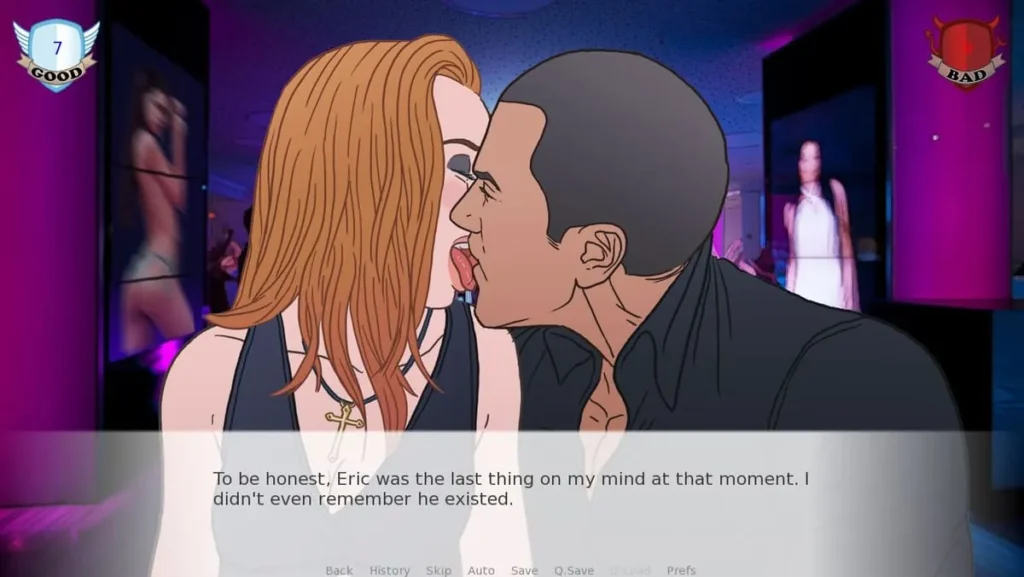
What immediately sets it apart is its aesthetic. In an era dominated by 3D models, the hand-drawn game art style is a breath of fresh air. Every character expression, every scene, feels personal and loaded with artistic intent. This isn’t just a stylistic choice; it enhances the emotional connection. Ashley’s smirk, a friend’s worried glance, a scene of tension—all are rendered with a rawness that polygons often struggle to capture. This art gives the game a distinct, almost tangible personality, making the world of this narrative-driven indie game feel unique and deeply immersive.
But the true genius lies beneath the beautiful art. The game masterfully explores moral choices in games, but with a crucial twist: it rarely judges you. There are no obvious “Paragon” or “Renegade” prompts, no morality meters ticking up or down. You’re presented with situations—often uncomfortable, risky, or ethically grey—and must live with the organic consequences. The game understands that “bad” choices aren’t made in a vacuum; they’re often tempting, logical, or born from frustration. This creates a playground for genuine role-playing, where you can explore paths you’d never consider in real life, all within the safe framework of this captivating branching narrative game.
My First Playthrough Lesson: I once chose what I thought was a harmless, slightly rebellious white lie early on to avoid a boring family dinner. Three “chapters” later, that lie had mutated, was discovered by the wrong person, and became the catalyst for a chain of events that completely alienated a character I loved. The game had remembered, and it made me feel the weight of that tiny, off-hand decision. That’s the magic here.
Character Development Through Player Choices
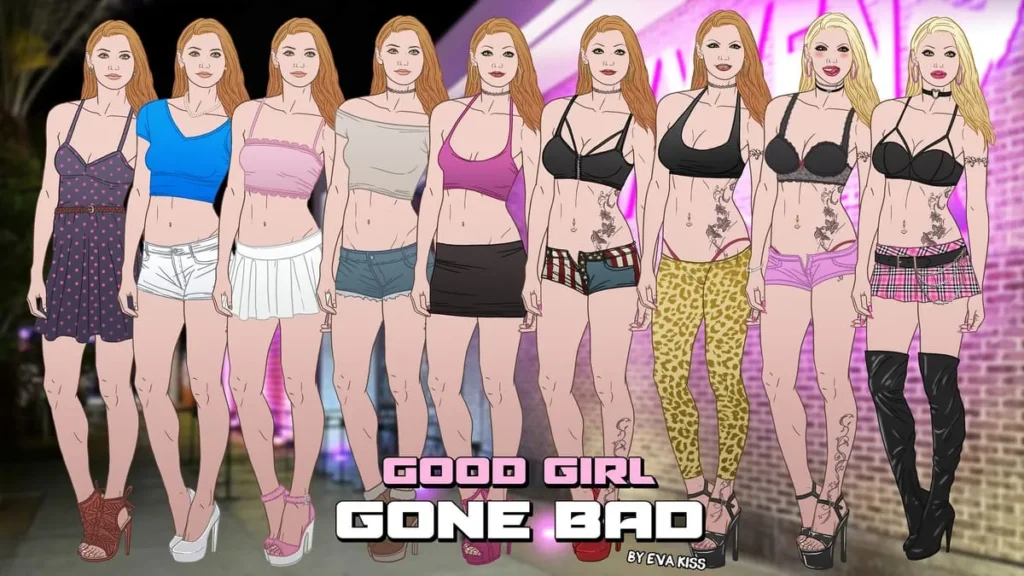
In most games, character arcs are pre-written. In Good Girl Gone Bad, Ashley Graham’s arc is a collaboration. The Ashley Graham character story is a blank canvas that you paint with every interaction. You don’t just guide her actions; you fundamentally shape her personality, her values, and her worldview. Is she a conflicted young woman seeking to break free from a restrictive life? A strategic social climber? Someone who discovers a genuine thrill in rebellion? That’s for you to decide.
This development isn’t about picking a “personality type” at the start. It’s cumulative, built through dozens of micro-decisions. A choice to stand up to a bully here, a decision to cheat on a test there, a moment of kindness or cruelty toward a friend—each act reinforces a behavioral pattern. The game’s dialogue and other characters’ reactions will subtly shift to reflect the “Ashley” you’re creating. A character who has been consistently kind may receive more trust and opportunities for intimacy. One who has been ruthless might be feared or respected, opening different, shadier doors. This is choice-based gameplay mechanics at their most sophisticated: you are writing her internal monologue through external actions.
Let’s look at a concrete example of how a single moment can diverge a path.
Example Scenario: The Library Encounter
Ashley is studying when approached by a charismatic but troublesome acquaintance who suggests ditching to go to an exclusive, adults-only party.
- Choice A (The “Good Girl” Path): “No way. I have a major test tomorrow, and my parents would kill me. You shouldn’t go either.” This reinforces Ashley’s responsible, rule-abiding nature. It may strengthen her relationship with her more studious friends and keep her family life stable. However, it could also cause the acquaintance to label her as “boring,” potentially closing off an entire wing of social (and story) opportunities involving that circle.
- Choice B (The “Rebellious” Path): “You know what? Screw this test. Let’s go.” This immediately plunges Ashley into a new environment. It sparks a storyline full of new characters, risks, and potential rewards. It might damage her academic standing and trust with her family, but it also fosters a sense of adventure and independence. This one decision doesn’t just change a scene; it can reroute the entire middle section of the game, introducing plots about nightlife, complex new relationships, and personal risk.
This is the core of the Ashley Graham character story—it’s emergent. You witness her development not through cutscenes you watch, but through the consequences of the actions you chose for her. The game trusts you to manage her metamorphosis, for better or worse.
The Branching Narrative System Explained
So, how does the game keep track of your unique chaos? The branching narrative game structure of Good Girl Gone Bad is less like a tree with a few big branches and more like a sprawling, interconnected river delta. Choices don’t just lead to “Ending A, B, or C.” They create cascading effects that alter relationships, open or seal entire story chapters, and change how characters perceive and interact with Ashley forever.
The system operates on both macro and micro levels. A major decision might determine which location you have access to next or which primary love interest pursues you. Meanwhile, smaller, seemingly inconsequential choices build up your “relationship score” with other characters behind the scenes. These scores aren’t shown to you, but they determine who is willing to help you in a crisis, believe your lies, or become your enemy. It’s a web of cause and effect that makes every playthrough feel distinct.
What’s truly impressive is the narrative coherence. Despite the potential for wildly different stories, the core themes of growth, desire, consequence, and self-discovery remain constant. Whether Ashley ends up empowered, corrupted, heartbroken, or triumphant, the journey feels logically consistent. The game achieves this by ensuring that every branch, no matter how extreme, is a believable extension of the choices you made. Your story always makes sense because it’s yours.
To visualize how these paths can diverge, let’s look at some potential outcomes stemming from key moral crossroads:
| Player Choice Focus | Primary Story Path | Key Consequences & Outcomes |
|---|---|---|
| Upholding Responsibility Prioritizing family, studies, and old friends. |
The Traditionalist Path | Stronger family bonds, academic success, stable (if predictable) friendships. May lead to feelings of stagnation, missing out on “wild” experiences, and potential resentment from more adventurous characters. |
| Embracing Rebellion Seeking thrill, new social circles, and defying expectations. |
The Libertine Path | Access to exclusive parties and risky situations, intense new relationships, a powerful sense of freedom. Risks include academic failure, broken family trust, legal trouble, and emotional burnout. |
| Strategic Manipulation Using charm, deceit, and social leverage to get ahead. |
The Social Climber Path | Gaining popularity, material benefits, and power over peers. Leads to complex power-play relationships, high-stakes drama, and a storyline focused on reputation. The risk is a catastrophic loss of trust if schemes unravel. |
| Balanced Exploration Mixing responsible choices with occasional, calculated risks. |
The Hybrid Path | The most complex and variable narrative. Allows Ashley to navigate multiple worlds but often leads to heightened tension as she struggles to maintain her double life. Outcomes are highly dependent on specific choices and luck, leading to unique, nuanced endings. |
This level of branching narrative game design means replayability is through the roof. A second playthrough isn’t about seeing slightly different dialogue; it’s about exploring a parallel universe version of Ashley’s life. You’ll discover entire characters and subplots you never knew existed, all because you said “yes” instead of “no” at a critical juncture hours earlier.
The mature content in Good Girl Gone Bad serves this narrative purpose. It’s not gratuitous; it’s foundational to exploring its themes of desire, agency, and consequence. The game presents adult situations as part of its honest look at a young woman’s exploration of her identity and boundaries. It expects a mature player who can engage with these themes thoughtfully, making the moral choices in games feel that much more significant and real. You’re not just picking options; you’re navigating the complex terrain of adult relationships and personal freedom.
Ultimately, the appeal of this visual novel is the depth of its simulation of life’s butterfly effect. It appeals directly to players who see games as a medium for storytelling and emotional exploration. It proves that choice-based gameplay mechanics, when executed with this much care and complexity, can create a more personal and impactful experience than any scripted epic. Your story with Ashley Graham awaits—what will you write? ✍️
Good Girl Gone Bad stands out as a thoughtfully crafted visual novel that prioritizes meaningful player agency and narrative depth. Through its hand-drawn aesthetic, complex branching storylines, and morally nuanced storytelling, the game offers players genuine freedom in shaping Ashley Graham’s journey. Whether you’re seeking a narrative experience where your choices truly matter, exploring character-driven storytelling, or enjoying a game that embraces moral ambiguity without judgment, Good Girl Gone Bad delivers on its promise of coherent, exciting gameplay. The combination of artistic presentation, character development, and multiple story paths ensures that each playthrough offers something new to discover. If you appreciate visual novels that respect player intelligence and offer real consequences for your decisions, this game deserves a place in your collection.