
Peasant’s Quest
Play Peasant’s Quest
Peasant’s Quest Screenshots




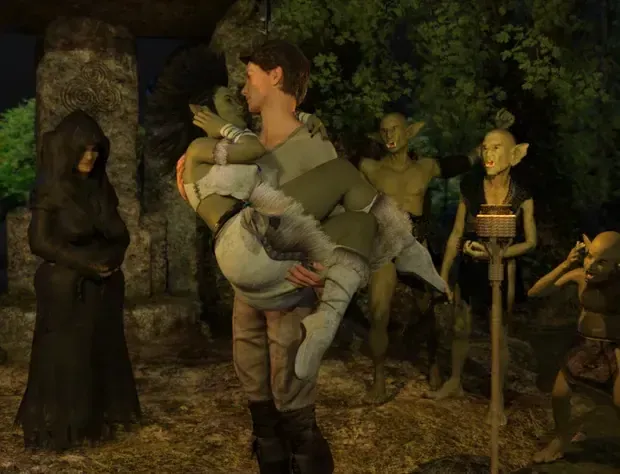



Peasant’s Quest review
Discover secrets, quests, and tips for this captivating RPG adventure
Ever stumbled upon a game that hooks you from the first pixelated step? That’s Peasant’s Quest for me—a thrilling RPGmaker gem where you play as a humble villager navigating a world brimming with quests, encounters, and steamy twists. I remember my first playthrough: starting as a simple peasant, I quickly got lost in forging paths through forests, chatting up blacksmiths, and unraveling spider-infested mysteries. If you’re diving into Peasant’s Quest, this guide unpacks everything from core mechanics to hidden endings. Packed with Peasant’s Quest tips, walkthroughs, and insider strategies, it’s your roadmap to mastering this addictive title. Let’s embark on your quest!
Mastering Peasant’s Quest: Core Gameplay and Tips
I still remember my first hour in Peasant’s Quest. I wandered the pixelated village, utterly confused, clicking on everything from grumpy chickens to suspiciously clean haystacks. I spoke to the wrong person first, got a rusty spoon instead of a usable tool, and got completely lost trying to find the miller’s missing flour. I was ready to quit. But then, something clicked. I realized this wasn’t about rushing; it was about paying attention. That shift in mindset transformed my experience, and it’s the core lesson I want to share in this Peasant’s Quest walkthrough. 🎮
This chapter is your foundation. Think of it as the essential Peasant’s Quest guide to understanding the world, its rules, and how to avoid the frustrating mistakes that cost me hours. We’ll cover the core gameplay loop, vital beginner strategies, and how to start sniffing out those delicious hidden Peasant’s Quest secrets. Let’s turn your initial struggle into a triumphant adventure.
What Makes Peasant’s Quest Stand Out?
At first glance, Peasant’s Quest might look like a classic point-and-click RPG. But its soul is in the details and the deliciously punishing cause-and-effect of a living world. Unlike games that hold your hand, this one respects your intelligence—and your ability to make spectacularly bad choices. 😅
The core gameplay revolves around conversation, observation, and creative problem-solving. Every villager has a schedule, opinions about other characters, and memory of your actions. The dialogue system is rarely about picking a “correct” answer; it’s about gathering information, building rapport (or burning bridges), and uncovering clues. The inventory system is famously restrictive, forcing you to think about every item you carry. Is that moldy cheese more important than a piece of twine? Only your current objective knows.
Combat is often a last resort and usually a sign you’ve failed a puzzle. The game heavily rewards combat avoidance through clever dialogue, stealth, or using the environment. This philosophy makes discovering a non-violent solution to a problem, like the infamous Peasant’s Quest spider quest, infinitely more satisfying than simply whacking something with a hoe.
Ultimately, what stands out is the sense of a coherent, reactive world. Helping the blacksmith might close off a favor from the tanner. A seemingly small lie can spiral into a town-wide rumor. This is why a solid Peasant’s Quest walkthrough is so valuable—it helps you navigate these ripples without spoiling the joy of discovery.
Essential Beginner Strategies for Success
Want to know how to play Peasant’s Quest effectively? Start here. These are the lessons I learned the hard way so you don’t have to.
- Talk to Everyone. Twice. 👥 Exhaust every dialogue option. People reveal new information after you’ve completed other tasks or are carrying specific items. The village gossip is your most powerful tool.
- Examine Everything. Literally hover your cursor over every pixel. Many Peasant’s Quest secrets are hidden in plain sight, revealed only by a careful “Look” command at a specific tree, stone, or patch of wall.
- Manage Your Inventory Ruthlessly. You have very limited space. Store non-essential items in a safe spot (your starting hut often works). Think in terms of solutions: do you need a sharp object, a length of rope, or something heavy?
- Save Often, and in Multiple Slots. This is non-negotiable. Save before any major conversation, when entering a new area, and after any success. Some choices are permanent and can soft-lock you hours later.
- Read the Quest Log Carefully. The log often contains subtle hints or phrasing clues that point you toward a solution. It’s not just a reminder; it’s part of the puzzle.
- Think Laterally. Need to reach a high shelf? The game won’t give you a step-ladder. Maybe you can stack that crate, use that long pole, or convince the unusually tall baker to help. This applies doubly for the Peasant’s Quest spider quest—direct confrontation is rarely the answer.
- Visit the Blacksmith Early and Often. The Peasant’s Quest blacksmith is more than a vendor. He’s a source of rumors, a quest giver, and your key to upgrading essential tools. Building a good relationship with him unlocks critical paths.
- Don’t Hoard Your Gold. Early-game money is best spent on information, key tools from the blacksmith, or specific quest items. Saving up for “the best sword” is usually a trap, as combat is to be avoided.
Let me tell you a quick story of failure. On one playthrough, I found a shiny silver locket in the woods. When the grieving widow in town asked if I’d seen any keepsakes, I figured I could get a better reward elsewhere and said “No.” Big mistake. 🤦♂️ Not only did she refuse to speak to me again, but the locket became a cursed item that drained my health, and the town priest (her brother) raised his prices for me. My greed created a cascade of problems. The recovery? I had to spend all my early gold on a costly purification from the traveling mystic, setting my progress back drastically. Moral: Honesty, or at least clever bartering, is often the best policy.
How to Unlock Hidden Paths and Secrets?
The true magic of Peasant’s Quest lies off the beaten path. Unlocking these areas requires a blend of diligence, experimentation, and sometimes, returning much later with a new item or piece of knowledge.
First, master the art of sequence breaking. The game expects you to do A, then B, then C. But what if you do C first? Often, the dialogue changes. For example, if you acquire a specific rare herb before the alchemist asks for it, his reaction and reward can be dramatically different. This is a core method for uncovering Peasant’s Quest secrets.
Second, pay attention to time and weather. Some events only trigger at night. Certain characters only appear on market day. A hidden cave entrance might only be visible during a rainstorm. The game world is on a clock, and syncing with it is key.
Locations like the Peasant’s Quest blacksmith shop are hubs for secrecy. Did you check behind his anvil? What about examining the “worthless” scrap metal pile when you’re carrying a magnet? His forged items can also be used in unexpected ways—a horseshoe isn’t just for luck; it can be a counterweight or a crude blade.
The Peasant’s Quest spider quest is a perfect case study. Everyone gets stuck here. The obvious solution involves fire or a weapon. But the secret solution involves understanding spider behavior. Perhaps there’s a pungent herb in the herbalist’s garden that repels arachnids. Or maybe you can feed it the fat fly buzzing near the stables to make it docile. Experiment! The game rewards creative, non-violent ecology.
To help you navigate the critical early hours, here’s a breakdown of some pivotal first decisions. Use this Peasant’s Quest guide table to understand the consequences of your choices.
| Choice | Outcome | Recommendation |
|---|---|---|
| How to help the Blacksmith (Part 1) | He asks for help finding his lost tongs. You can agree to search, offer to buy new ones, or refuse. | Always agree to search. This unlocks his friendship questline and gives you access to his “special stock” later, including a vital tool for a late-game secret. |
| First item purchase from the Blacksmith | You can buy a cheap dagger, a sturdy shovel, or save your money. | Buy the shovel. The dagger is weak and promotes combat. The shovel is a multi-tool for digging, prying, and even solving environmental puzzles. It’s the best early-game investment. |
| The Miller’s Flour Dilemma | He accuses the baker of stealing. You can side with the miller, the baker, or investigate yourself. | Investigate yourself. This reveals the true culprit (a family of pilfering mice), grants reputation with both parties, and earns you a unique reward (cheese, useful for the spider quest). |
| Finding the Lost Child’s Toy | The toy is in a tall tree. You can try to climb, knock it down, or find a long pole. | Find a long pole. Climbing risks a game-over fall. Knocking it down with stones can break it. Using a pole (like from the fishing hut) is the safe, intended solution and makes the child’s family friendly. |
| Dealing with the Guard at the Bridge | He won’t let you pass. You can bribe him, try to sneak past at night, or find an alternate route. | Find an alternate route first. The bribe is costly. Sneaking is high-risk. Exploring the riverbank to find a rickety raft or a shallow ford is a free, safe method that also unveils a new foraging area. |
| The Herb for the Herbalist | She needs Moonleaf, which only glows at night. Do you go at dusk, midnight, or dawn? | Go at midnight. Dawn is too late, dusk is too early. Going at midnight ensures you find the herb, and you might also witness a unique nocturnal creature, hinting at a much larger secret questline. |
This is just the beginning of your journey. With these Peasant’s Quest tips solidifying your approach, you’re ready to move beyond the village. The deeper woods, the forgotten crypts, and the mysteries of the old castle await. In our next chapter, we’ll dive into the advanced quests and hidden endings, including how that strange dream about a glowing turnip is more than just peasant indigestion… 🥕✨
There you have it—your complete blueprint to conquering Peasant’s Quest, from those nail-biting early quests to uncovering every hidden delight. I poured hours into this world, laughing at my blunders and cheering epic wins, and now it’s your turn to craft legendary tales. Grab the game, apply these strategies, and share your wildest adventures in the comments below. What’s your favorite moment so far? Dive in, quest on, and may your paths always lead to triumph!