
Shut Up and Dance
Play Shut Up and Dance
Shut Up and Dance Screenshots
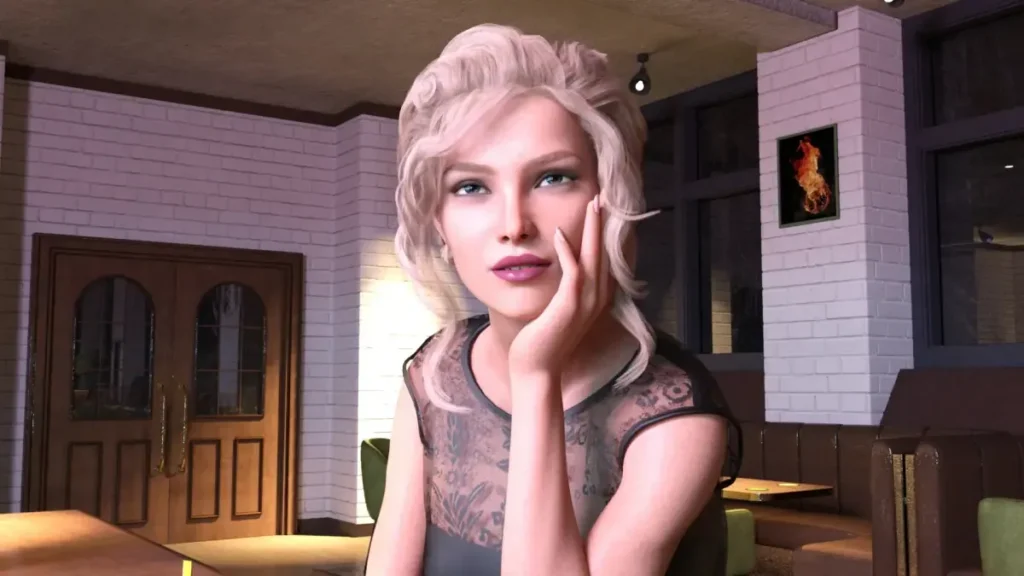





















Shut Up and Dance review
Master every path and decision in this psychological thriller adventure game
Shut Up and Dance is a narrative-driven adventure game that challenges players to navigate complex moral dilemmas and branching storylines. This interactive experience puts you in control of pivotal decisions that shape the outcome of the game’s dark, psychological narrative. Whether you’re a first-time player or looking to unlock all possible endings, this comprehensive guide covers everything you need to know about gameplay mechanics, decision points, and strategy to experience all the game has to offer.
Understanding the Game Mechanics and Story Structure
You know that feeling when you’re watching a thriller and you shout at the screen, “Don’t go in there!”? In most games, the character goes in anyway. But not here. In Shut Up and Dance, you are the one who decides whether to open that door, send that text, or tell that lie. Every single choice is yours, and the game never lets you forget it. This isn’t just a story you watch; it’s a nightmare you navigate through a series of interactive story choices that forge your unique path. Welcome to the heart of what makes this decision-based adventure game so brilliantly unsettling. Before we dive into specific paths, you absolutely need to understand the machine under the hood—the Shut Up and Dance game mechanics that make this psychological journey tick.
### How the Game’s Branching Narrative System Works
At its core, Shut Up and Dance is a masterclass in branching narrative gameplay. Think of the story not as a straight line from A to B, but as a sprawling, nervous system. One major decision sends a jolt down one set of pathways, permanently closing off others and activating new, often terrible, possibilities. 🧠
The game tracks everything. I’m not exaggerating. It remembers if you were polite or rude to a co-worker, if you hesitated before an action, or if you looked at something you shouldn’t have. This invisible ledger of your morals is constantly referenced, creating a profoundly personal experience. My first playthrough was a mess of panic-driven clicks, and the characters reacted to my hastiness with a realism that felt like a punch in the gut.
The structure brilliantly mirrors the game’s themes of surveillance and consequence. There’s no “good” or “evil” meter filling up. Instead, the narrative folds and twists based on a complex web of cause and effect. A small, seemingly innocuous choice in the first hour can completely change the context of a confrontation in the final act. This makes the psychological thriller game paths feel less like curated story branches and more like watching a domino collapse you set up yourself an hour ago.
Pro Tip: Play with headphones and without distractions. The game’s tension is built through subtle audio cues, character breaths, and the agonizing silence while you ponder a choice. Rushing ruins the experience.
Here’s a look at some of the pivotal junctions you’ll encounter. This table breaks down a few major interactive story choices, their immediate tension, and the long-shadow they cast on your story.
| Major Decision Point | Your Available Options | Immediate & Long-Term Consequences |
|---|---|---|
| The Initial Blackmail | Comply immediately / Try to close the laptop / Call for help | Sets the tone for your obedience. Attempting to fight back can trigger more aggressive threats sooner, framing you as “difficult” to your tormentors. |
| The Delivery at the Restaurant | Complete the task stealthily / Confess to the manager / Abandon the task and run | This is a major character test. Failure or confession here can lead to a completely different, more chaotic middle act with new accomplices and dangers. |
| Conflict with a Fellow “Player” | Show empathy and ally / Use threats to dominate / Remain silent and detached | Directly influences who, if anyone, might help you later. It also shapes the game’s thematic commentary on complicity and shared trauma. |
| The Final Confrontation | Seek redemption / Embrace the rage / Total surrender | The culmination of every prior choice. Your demeanor and history here unlock specific final dialogue and, ultimately, which ending you receive. |
### Key Decision Points That Shape Your Playthrough
While the game is a constant stream of choices, certain moments act as heavy gears that shift the entire narrative machinery. These are the points where you’ll feel your stomach drop, because the game makes the weight palpable. ⚖️
One of the earliest and most defining is how you handle the secret itself. Do you frantically try to delete evidence, or do you follow orders to the letter in hopes it will end? This establishes your character’s default state: panicked, resigned, or cunning. I played through once trying to be a clever problem-solver, only to find the game’s AI antagonists were always ten steps ahead, making my “cleverness” feel pathetic.
Another colossal moment involves betrayal. You will be asked to sacrifice someone else to save your own skin. This isn’t a simple “yes/no” prompt. It often involves a multi-step process of manipulation, lying, or setting someone up. The Shut Up and Dance game mechanics excel here, making you actively participate in the awful act through quick-time events or dialogue trees, rather than just selecting “Betray Friend.” You have to do it. The ripple effect is immense, stripping away your character’s (and your own) sense of innocence.
Perhaps the most subtle yet powerful decisions are the silent ones. Whose photo do you look at the longest on a desk? What do you choose to stare at in a moment of quiet? The game tracks your gaze and your hesitation. In a classic linear game, these are meaningless. In this decision-based adventure game, they can be interpreted as character depth and later used as psychological ammunition against you. It’s terrifyingly clever.
### Multiple Endings and Path Variations Explained
Ah, the crown jewel of any branching narrative: the endings. Shut Up and Dance doesn’t have a simple “good, bad, and secret” finale. Instead, it offers a spectrum of conclusions that feel like direct, logical outcomes of the person you chose to be throughout the ordeal. Crafting a true multiple endings guide is tricky because the variations are nuanced, but they broadly tie to a few key themes: truth, consequence, and personal dissolution. 🎭
The most common first ending players stumble into is the “Consequence” ending. It’s the one where every bill comes due. You’ll see this if you played selfishly, betraying others and focusing solely on self-preservation. The game reflects your moral choices back at you with brutal clarity. To unlock all endings, you must consciously change these core behavior patterns in subsequent playthroughs.
Then there are the more specific, path-locked conclusions. Did you form a genuine, empathetic connection with another person in the hellscape? That relationship can lead to a uniquely tragic or bittersweet finale that you can’t access if you treated everyone as a tool. Did you spend the game trying to uncover who was behind it all? There’s an ending for detectives, but it might not be the closure you want.
The absolute “true” ending—the one that layers on the final, devastating context—requires a very specific combination of curiosity, attention to detail, and a willingness to dig into the game’s world beyond your own panic. It’s not about making “good” choices, but about making inquisitive ones. This is the ultimate goal for many seeking how to unlock all endings. It’s the finale that recontextualizes everything you’ve done and will leave you staring at the credits in silence.
Remember, the game’s save system typically autosaves at major junctions, often locking you into a path. This reinforces the finality of your decisions. There’s no quick-scumming to test options without commitment. To experience different psychological thriller game paths, you must start a new game and live with a new set of choices from the beginning. This design is intentional and masterful, making each playthrough a distinct, anxious journey.
FAQ: Your Game Mechanics Questions Answered
Q: Can I go back and change a single decision without restarting?
A: Generally, no. The game uses an autosave system that emphasizes the permanence of choice. To explore different branches, you need to begin a new playthrough. This is a core part of the Shut Up and Dance game mechanics and its thematic punch.
Q: How many endings are there, really?
A: While there are a few major ending scenarios, each has subtle variations based on your specific actions and relationships. A comprehensive multiple endings guide would list 5-7 distinct finales, but the emotional impact varies wildly within them.
Q: Are there “right” or “wrong” choices?
A: Not in a moral sense, but there are definitive choices that lock you into specific psychological thriller game paths. The game is less about winning and more about experiencing the consequence of a persona you choose to embody.
Q: How long does it take to see everything?
A: A single playthrough is roughly 3-4 hours. To unlock all endings and see the major branching narrative gameplay variations, you’re looking at 15-20 hours of playtime, as you’ll need to make fundamentally different interactive story choices each run.
Q: Do small choices (like dialogue tone) actually matter?
A: Absolutely. They build your character’s profile and can influence how other characters react to you in critical moments. In this decision-based adventure game, a pattern of aggression versus passiveness can open or close doors later on.
Ultimately, understanding the Shut Up and Dance game mechanics is the key to moving from being a passive victim of the story to an active, if horrified, participant in its construction. Every click is a brushstroke on a portrait of desperation. By mastering how the branching narrative gameplay functions, you empower yourself to explore every dark corner of this story intentionally, seeking out each devastating piece of the puzzle in your quest to unlock all endings. Now that you know how the machine works, you’re ready to step back in and make your next choice. Just remember, you have to live with it. 😰
Shut Up and Dance offers a compelling interactive experience where your choices genuinely matter and shape the narrative in meaningful ways. By understanding the game’s branching mechanics and the consequences of each decision, you can navigate the story with greater confidence and explore the multiple endings the game has to offer. Whether you’re seeking a specific outcome or want to experience all possible paths, this guide provides the framework you need to master the game’s complex narrative structure. Take your time with each decision, consider the character motivations at play, and don’t hesitate to replay sections to explore alternative choices and discover new story variations.