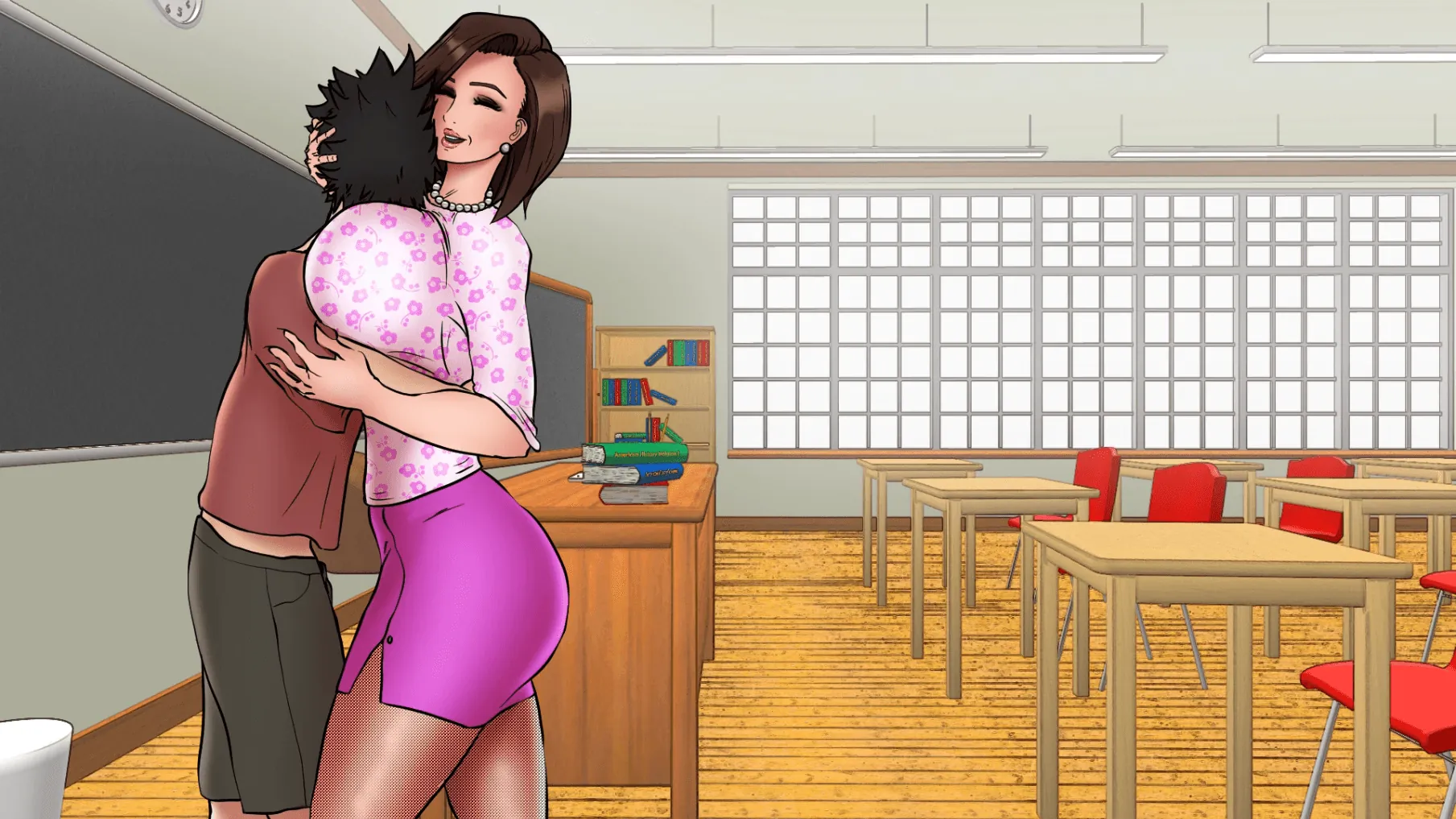
Play The Assistant
The Assistant Screenshots












The Assistant review
Story, gameplay, choices and community insights about The Assistant
The Assistant is a narrative‑driven game that mixes relationship management, branching choices, and a modern everyday setting where you work closely with a demanding boss and a growing cast of side characters. From the first minutes, it is obvious that The Assistant focuses on dialogue, character chemistry, and the tension of balancing work expectations with your own personal boundaries and desires. In this guide, I will walk you through how the story unfolds, what the gameplay loop really feels like after several hours, and the small details that do not show up in store descriptions but completely change how you experience The Assistant.
What Is The Assistant Game All About?
So, you’ve heard people talking about The Assistant game and you’re wondering what all the fuss is about? 🤔 You’re not alone. It’s one of those experiences that’s hard to pin down with traditional labels. Is it a management sim? A visual novel? A relationship builder? The truth is, it’s a brilliant, tense blend of all three, wrapped in a deceptively simple package of daily tasks and charged conversations.
At its heart, what is The Assistant game about? It’s about power, proximity, and the subtle art of understanding another person. You aren’t saving the world from dragons or commanding armies. Your battlefield is a sleek modern office, a luxury apartment, and upscale cafes. Your mission? To manage the life of someone who is used to being in control, while slowly figuring out where you stand within it. This The Assistant game premise hooks you not with explosions, but with the quiet intensity of a misplaced document or a perfectly timed cup of coffee. ☕
Let’s pull back the curtain and get you properly acquainted with this unique narrative experience.
Core Premise and Setting of The Assistant
Forget everything you know about fast-paced gaming. The Assistant asks you to slow down and pay attention. You step into the freshly polished shoes of a new hire, tasked with supporting a successful, demanding, and often enigmatic employer. Your job description is both clear and infinitely vague: keep their world running smoothly. This means managing calendars, handling correspondence, organizing events, and being available for… well, whatever comes up.
The The Assistant gameplay overview for your first hour is deliberately routine. You’ll meet your boss, get a tour of the minimalist office, learn the basic interface for sorting emails and scheduling appointments, and meet a colleague or two. It feels almost mundane. But that’s the trick. The game masterfully uses this ordinary framework to heighten every interaction. A simple request to “fetch the documents” isn’t just a task; it’s a test. The tone of a morning greeting isn’t just pleasantry; it’s a data point in an evolving psychological profile.
The game’s genius is in making you care deeply about getting small things right. Choosing the correct lunch order feels as consequential as choosing a dialogue branch in a life-or-death scenario.
This isn’t a game about action; it’s a game about reaction. The The Assistant story unfolds through these accumulated moments of service and conversation. The setting shifts between the professional space of the office, more personal spaces like your boss’s home during a “work visit,” and social venues like restaurants or galleries. Each location changes the rules of engagement slightly, blurring the lines between professional duty and personal interest. The story progresses across distinct chapters or updates, often tied to projects or phases in your employer’s work, each one introducing new characters, new layers of complexity, and higher-stakes demands on your attention and loyalty.
Main Characters and Relationship Dynamics
While you’ll encounter a small circle of recurring faces—a rival coworker with their own agenda, a friendly client who knows your boss a little too well, a no-nonsense personal trainer—The Assistant characters truly revolve around a central duo: you and your boss. This relationship is the entire engine of the game.
Your boss is the sun around which this universe orbits. They are charismatic, sharp, unpredictable, and used to getting what they want. They are not a villain, but they are unquestionably in charge. Your character, whose personality you shape entirely through your choices, is the reacting body pulled into their gravity. Are you a flawless professional, all crisp efficiency and polite distance? A ambitious climber, looking for any angle to get ahead? Or someone who sees the cracks in the facade and is genuinely curious about the person behind the power?
The other The Assistant characters serve as fantastic foils and alternate pathways. They offer gossip, warnings, side quests, and sometimes flirtations, providing context and contrasting perspectives on your main relationship. Their presence reminds you that your boss exists in a wider world, and how you treat them can open or close doors later in the The Assistant story.
I learned this the hard way on my first playthrough. I was the model of professionalism. “Yes, sir.” “Right away, ma’am.” “Of course.” I was efficient, reliable… and utterly boring. The relationship progressed at a glacial pace, all business. It was like having the world’s most tense job simulation. 😅
On my second run, I dared to be different. I added a little wit to my responses, showed cautious curiosity about non-work topics, and occasionally (very occasionally) pushed back on an unreasonable demand. The difference was night and day. The dialogue became sharper, more personal. New scenes unlocked—a late-night drink after a successful deal, a confidential chat during a car ride. The The Assistant game transformed from a job into a gripping, character-driven drama. It taught me that this game rewards emotional risk-taking.
To help you keep track of the key personalities you’ll be navigating, here’s a quick guide:
| Character | Their Role | Typical Attitude Towards You |
|---|---|---|
| The Boss | Your employer and the central figure. Drives the plot and most of your tasks. | Demanding, testing, and gradually (depending on you) more revealing. A wall of professional cool that can develop cracks. |
| The Protagonist (You) | The new assistant. A blank slate defined by your choices. | N/A – This is you! Your attitude shapes every interaction. |
| The Colleague (e.g., Alex/Riley) | A fellow employee, sometimes in a similar role, sometimes in a different department. | Can range from competitively wary to conspiratorially friendly. A key source of office gossip and alternative perspectives. |
| The Confidant (e.g., Jordan) | An old friend or associate of your boss, often met in social settings. | Observant and sometimes teasing. They often see the dynamic between you and your boss more clearly than anyone and may offer cryptic advice. |
How Story Progression and Chapters Are Structured
Understanding the flow of The Assistant game is crucial to enjoying its rhythm. It’s not an open-world sandbox; it’s a carefully choreographed series of encounters. The structure typically breaks down into “Days” or “Chapters,” each with a familiar pattern:
- The Morning Briefing/Main Task Segment: 🏢 This is often the core of a chapter. You’re in the office, tackling the day’s primary workload—sorting a bursting inbox, planning a complex event, researching for a big meeting. This is where you prove your competence.
- Private Interactions: 🤫 Woven into or after the main task are one-on-one conversations. This could be your boss checking in, a side character pulling you aside, or a phone call you have to manage. These are where relationships are built.
- Optional/After-Hours Scenes: 🌃 Many chapters conclude with or include optional moments. Perhaps your boss asks you to stay late to finish something, or a colleague invites you for a drink. Saying yes or no has consequences, often determining which character subplot you advance.
This is precisely why so many players immediately search for The Assistant walkthrough basics. A choice in Chapter 2, as simple as how you handle a minor complaint from a client, can determine whether a specific side character trusts you enough to share crucial information in Chapter 5. Choosing to work through lunch instead of taking a break might earn you a note of praise, but miss a chance encounter that reveals a softer side to your employer.
The game is designed for multiple playthroughs. Your first run is for discovery, for living with the consequences of your instincts. Your second is for experimentation. What happens if I’m always rebellious? What if I focus entirely on befriending the colleague? The Assistant gameplay overview is, at its core, a system of trust-based gameplay. Every dialogue choice, completed task, and remembered preference is a brick in the bridge you’re building between two people. Some bridges lead to a respectful professional partnership. Others lead to a tense, charged rivalry. And others might lead somewhere… more complicated. 💫
The The Assistant story respects your intelligence. It doesn’t flash giant “THIS IS AN IMPORTANT DECISION” warnings. It trusts you to read the subtext, to remember past conversations, and to understand that in life—and in this brilliant game—the smallest moments often carry the most weight. So, dive in. Pay attention. And remember, sometimes the most powerful thing you can do is not just complete the task, but understand why it was asked of you in the first place.
To see this in action, let’s look at a tiny slice from an early day. Imagine your boss has just finished a stressful call and snaps about the room being too warm.
- Choice A (Professional/Neutral): “I’ll adjust the thermostat immediately.”
- Choice B (Observant/Empathetic): “It was a difficult call. I’ll get the room more comfortable and bring some water.”
Choice A gets the job done. It’s fine. You might get a curt nod. Choice B, while still performing the task, acknowledges the human element. It shows you’re listening beyond the words. It might earn a slightly longer look, a faint sigh of relief, a simple “Thank you.” That tiny shift in tone is the heartbeat of The Assistant game. It’s not about romance or grand drama; it’s about the profound intimacy of truly seeing someone, one meticulously chosen response at a time.
The Assistant stands out because it treats everyday routines, office tension, and quiet one‑on‑one moments as the heart of the experience. Once you understand its slow‑burn pacing and focus on dialogue, it becomes easier to appreciate how much small decisions change the way characters react to you. If you enjoy narrative‑driven games built around choices, relationships, and replay value, The Assistant is worth sitting down with for more than one run. Take your time on the first playthrough, pay attention to how people respond, and do not be afraid to experiment with different attitudes when you start again.